


Conquer Kit Check: Preparing to Go Beyond the Ultimate
If you’ve signed up for a Beyond the Ultimate race, you already know these events are about more than just running. They take place in wild, remote places where the environment plays a huge role in the experience. That’s part of what makes them special, but it’s also why the kit list matters.
We know kit checks can feel daunting. But they aren’t there to catch you out. They exist for one simple reason: safety.
Our medical teams and race staff are experienced and responsive, and in most cases we can reach runners quickly. However, the reality of operating in remote terrain is that recovery and evacuation can take time. Mountains, weather, rivers and difficult ground can slow down even the best rescue systems.
That’s why the equipment you carry matters. Your kit is your first line of protection if something goes wrong.
The goal of this guide is simple: help you understand why each item matters so you can choose the right gear the first time.
Start With the Race Pack
Your race pack is your roadmap for kit preparation. The kit list has been built from years of experience operating races in remote environments around the world.
Take some time to:
- Read the kit list carefully
- Understand why each item is required
- Start gathering your gear early
Different Beyond the Ultimate races have different requirements. A kit list designed for a desert environment looks very different from one designed for a mountain race where cold rain and wind are real factors.
Preparing early avoids last-minute stress and gives you time to test your equipment properly.
Why the Bivvy Bag Matters
One item that often raises questions is the bivvy bag.
In races like the Highland Ultra and Mountain Ultra, weather can change quickly. Rain, wind and low temperatures can combine to create conditions where hypothermia becomes a real risk, particularly if a runner is injured or forced to stop moving.
Your bivvy bag, along with your sleeping bag acts as your emergency shelter.
If you need to stop, wait for medical assistance, or shelter from severe weather, a proper bivvy bag helps retain warmth and keeps you dry while you wait.
Remember — while our response time is typically quick, evacuation from remote terrain can take time. The bivvy bag is there to help protect you during that window.
Not All “Bivvy Bags” Are the Same
This is where things can get confusing.
Many companies sell products labelled as bivvy bags that are actually survival blankets or reflective emergency bags.
These are not the same thing.
Products like the SOL Emergency Bivvy are designed primarily as short-term survival blankets. They can provide a small amount of warmth for a limited time, but they are not designed to withstand heavy rain, prolonged exposure, or strong winds.
In the conditions we often encounter in mountain races, they can quickly become ineffective.
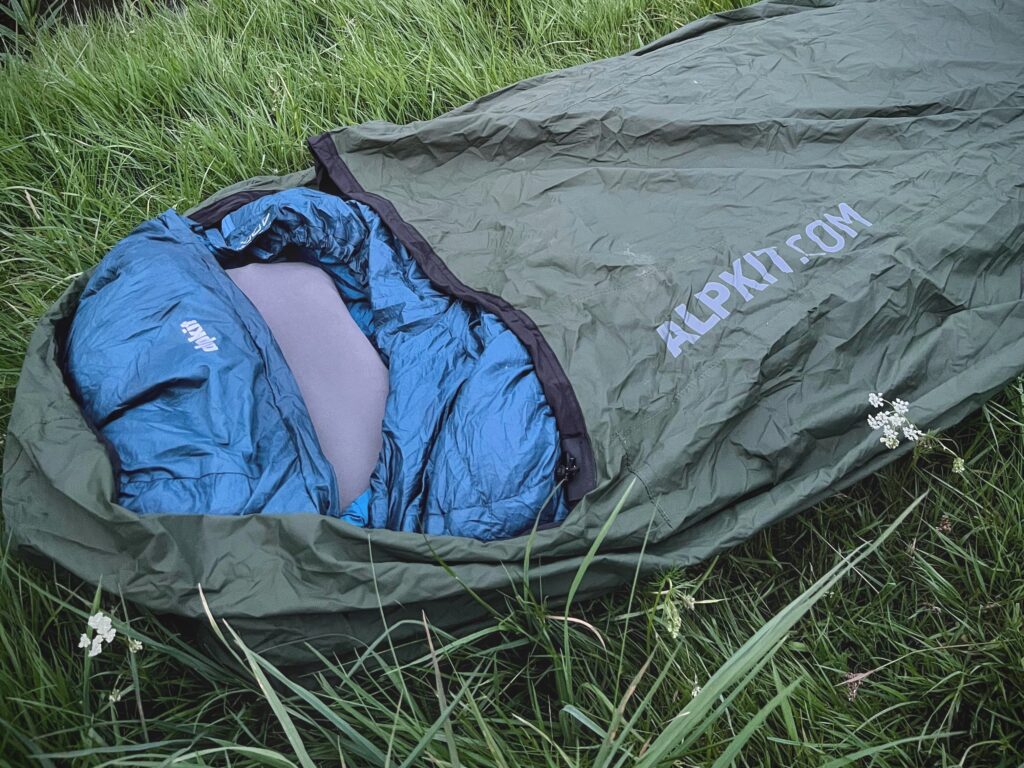
What we require is a fully waterproof bivvy bag, not just a reflective survival blanket.
What to Look For in a Proper Bivvy Bag
A suitable bivvy bag should be made from waterproof and breathable materials such as:
- GORE-TEX
- eVent
- Other waterproof breathable fabrics
These materials allow moisture to escape while preventing rain from getting in. That combination is critical for preventing condensation and keeping you dry if you need to shelter for a longer period.
Key features to look for include:
- Fully waterproof construction
- Breathable fabric
- Durable material suitable for harsh conditions
- Enough space to fit your body comfortably
Avoid:
- Single-layer foil bags
- Emergency survival blankets marketed as bivvy bags
- Non-breathable plastic covers
These items trap moisture and lose effectiveness quickly, which increases the risk of hypothermia rather than reducing it.
Recommended Bivvy Bags
If you’re unsure where to start, here are some solid options that meet race requirements.
Budget Options
Premium Options
Blizzard Bags and the Ice Ultra
In colder environments like the Ice Ultra, staying warm becomes the number one priority. That’s why runners are also required to carry a Blizzard Bag.
A Blizzard Bag is different from a bivvy bag. It’s made from a multi-layer reflexcell material that traps warm air within the structure of the bag. Think of it as a lightweight, portable insulated shelter.
The Blizzard Bag works alongside your bivvy bag, not instead of it.
Your waterproof bivvy bag protects you from wind, snow and moisture. The Blizzard Bag then adds critical insulation, helping your body retain heat while you wait for assistance or shelter from severe weather.
In Arctic environments, heat loss can happen extremely quickly, particularly if a runner is injured or unable to keep moving. The Blizzard Bag helps slow that process by creating a layer of insulation around your body.
When choosing a Blizzard Bag, the key things we’re looking for are:
- Genuine Blizzard Survival Bags made from reflexcell insulation
- Durable construction that won’t tear easily in cold conditions
- Enough size to fully enclose your body and trap warm air
These are designed specifically for cold-weather emergency survival, making them a crucial piece of kit for races like the Ice Ultra.
Building Your Kit (Without Breaking the Bank)
We’re very aware that building your race kit takes both time and money.
For many runners this is new territory, and the number of products on the market can be overwhelming.
That’s why we want to help you buy the right equipment the first time, rather than spending money on items that don’t meet requirements or won’t perform when it matters.
If you’re unsure about anything on the kit list, please reach out. We’re always happy to guide you.
Your Medical Kit
A well-prepared medical kit is another essential part of racing in remote environments. In a multi-stage ultra where runners operate with a high level of self-sufficiency, your medical kit can be the difference between continuing the race or needing to withdraw.
Some commonly asked-about items include:
Sterile Hypodermic Needles
Often used for draining blisters during foot care.
Recommended size:
21g needle (25mm x 0.8mm)
Sterile Hypodermic Needles – Amazon UK
Fleecy Web
A soft adhesive padding used to reduce friction and protect hot spots before they develop into blisters.
Fleecy Web Adhesive Padding – Amazon UK
Kinesiology Tape (KT Tape)
Useful for supporting muscles, protecting skin and managing hot spots.
A 5cm x 5m roll is recommended for flexibility in application.
BTU Store – RockTape™ Kinesiology Tape
Sterile Scalpel Blades
Individually packaged blades often used by medical professionals to assist with blister management.
Sterile Scalpel Blades – Amazon UK
Trauma Dressing
Also known as Israeli dressings, these are designed for treating significant bleeding and traumatic injuries. They provide compression and absorbency beyond standard dressings.
Preparing for Kit Check
When it comes time for kit check, preparation makes everything easier.
A few simple tips:
- Lay out your kit early
- Cross-reference every item with the checklist
- Test equipment like headlamps and batteries
- Pack items logically so they’re easy to inspect
Kit check should be a relaxed moment before the race — a chance to confirm you’re prepared and meet fellow runners.
Final Thoughts
The kit list exists because of the environments we operate in. These races take place in some of the most beautiful and remote landscapes on the planet.
With the right preparation, that remoteness becomes part of the adventure rather than a risk.
Take the time to build your kit properly, understand how to use it, and test it before the race.
And if you’re ever unsure about a piece of equipment, just ask.
See you on the startline
Kris King
Ready to gear up?
Explore the full range of equipment in the Beyond the Ultimate Store:
https://store.beyondtheultimate.co.uk/
From hardshells to tape, caps to Kupilka — everything you need to prepare for the race ahead.

